CompactLogix Communication Modules

News

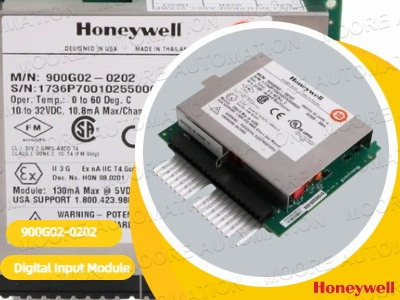
  • Honeywell 900G02-0202 digital input module helps upgrade industrial signal acquisition
    Honeywell 900G02-0202 digital input module helps upgrade industrial signal acquisition
    July 18, 2025

    Introduction With the continuous improvement of industrial automation, the accuracy and reliability of field signal acquisition are particularly critical. Honeywell 900G02-0202 digital input module is a high-performance input device designed to convert discrete field signals into readable data for control systems. This module is designed for harsh application scenarios to ensure seamless communication between field devices and process control systems. Reliable digital signal acquisition capability The 900G02-0202 module has multi-channel discrete input function, which can efficiently and accurately collect switch signals from field devices such as buttons, limit switches or proximity sensors. The module supports 16 independent input channels, which can monitor multiple field signals in real time, improve system response speed and data processing efficiency. Each channel adopts an independent isolation design, providing excellent anti-interference ability, effectively preventing the impact of voltage surges and electromagnetic noise common in industrial sites on the system. This design enables the module to operate stably in harsh industrial environments. Flexible integration and compatibility support The Honeywell 900G02-0202 module can be perfectly integrated into the Experion PKS process knowledge system and is compatible with the ControlEdge control platform. Its design complies with the standards of DCS (distributed control system) and PLC (programmable logic controller) and is widely used in multiple industrial fields such as petrochemical, power, metallurgy, and pharmaceuticals. The module supports hot-swappable operation, and can be replaced and maintained without interrupting system operation, significantly improving system maintenance efficiency. At the same time, the product complies with international industrial automation standards such as IEC 61131-2 to ensure its excellent performance in reliability and safety. Rugged design for harsh environments The hardware of the module adopts an industrial-grade design and can work stably in a temperature range of -40°C to +70°C. It is suitable for a variety of application environments such as control rooms and outdoor control boxes. Its circuit board is protected by a triple-proof coating, which is moisture-proof, dust-proof, and corrosion-proof, effectively extending its service life. In addition, the module has a self-diagnosis function, which can monitor line faults, channel abnormalities, power supply fluctuations and other problems, support preventive maintenance strategies, and effectively reduce the risk of system failure and downtime. Conclusion Honeywell 900G02-0202 digital input module is an indispensable signal acquisition unit in modern industrial automation systems. It has flexible integration, high acquisition accuracy, and a solid and reliable structure. It can be widely used in various automation control architectures. Through efficient digital signal processing capabilities, i...

    Read More
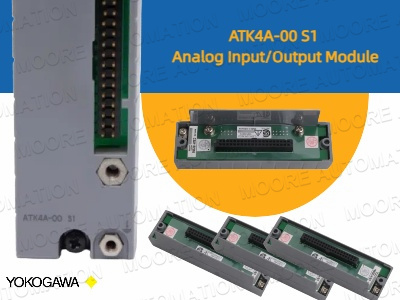
  • Yokogawa ATK4A-00 S1 Analog Input/Output Module: precision and active industrial automation tool
    Yokogawa ATK4A-00 S1 Analog Input/Output Module: precision and active industrial automation tool
    July 17, 2025

    Introduction The industrial flow rate, daily profit trend, digitization, automation, high performance I/O model demand and growth. Among the many products available, Yokogawa ATK4A-00 S1 Analog Input/Output Module with outstanding model signal processing ability, distributed control system (DCS) intermediate component. It is possible to set up a precise number system, control the process and time, and create an indispensable basis in the industrial environment. The main text includes a deep introduction to the core abilities of the model, technical advancement, and intermediate performance for industrial use. Industrial model signal processing ability ATK4A-00 S1 supports the design of the input and output routes, and the high-precision model signal for use with the input and control system required by the user. The model is designed to have a high division rate and to resist the voltage design, and when the current voltage is high or in poor conditions, it can also be used to ensure that the signal is changed. Its model includes import passageway and capacity for various sensor types, comprehensive heating electric devices, RTDs and more 4–20 mA standard transfer device; output part support electric current ring or electric signal output, can be connected to various industrial devices for adjustment. At the same time, the electrical separation system for the passageway and system construction, the efficient evacuation electrical system, and the installation system connectivity. Yoyokogawa flatland uninterrupted collection The model is a highly advanced and capable Yokogawa CENTUM VP ProSafe-RS control platform, which is currently an automated framework that has been integrated with the powertrain. It supports heating function, no demand stoppage can be completed immediately, modification or modification, directing the production industry, burning oil, etc. are particularly important. Imitation layout, ready-to-use method, departmental convenience, no need for large-scale processing, large reduction in production site engineering department costs. The communication system has an internal positioning function, can be used in a long distance, can be controlled in a fixed position, can be fixed at a high speed, has a low artificial cruise speed, and can stop the machine. In addition, ATK4A-00 S1 conforms to the international industrial automation standard, which provides long-term operation guarantee. Continuous high-precision number installation and improvement process control In today's industrial automation, the number of collective qualities is directly determined, the control efficiency is reduced, and the decision speed is increased. ATK4A-00 S1 or higher accuracy capture simulation signal, the number of controllers that can be used to control the control system, and the accuracy of the control system can be greatly improved. The module is quick to operate, low in duration, special temperature control, flow rate, power, etc. dynamic control en...

    Read More
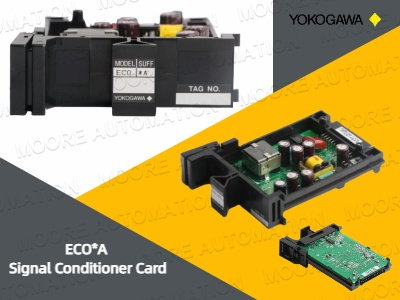
  • Utilizing Yokogawa ECO*A signal management system industrial signal integrity
    Utilizing Yokogawa ECO*A signal management system industrial signal integrity
    July 16, 2025

    Introduction In today's industrial automation process control system, reliable signal transmission is of utmost importance to maintain operational efficiency and safety. Yokogawa ECO*A signal control system, which makes sure the signal control system is designed separately. The system supports multiple types of sensors, controls, controllers, and a number of controllers. Due to the low noise of the traffic, the signal decreases and the protection system components are improved, the performance of the ECO*A is improved in the multi-species industrial environment, and the communication is an important effect. Main features and technical specifications of ECO*A signal management Yokogawa ECO*A signal management equipment has many technical characteristics, suitable for use in the manufacturing industry. A comprehensive collection of various types of input types, such as support for heating, heating and blocking (RTD) and model electric/current signals, and various types of sensor technology that provide convenience. Equipped with a circuit board for electrical isolation between imports and exports, effective prevention of earth circuits, and guaranteed signal integrity. It has a high import accuracy, a constant measurement, and its ability to perform precise measurement under intense conditions. Normal support is available for import equipment, and specific equipment is required. The card's performance is low, the structure is solid, the convenience is cheap, and the machine can be controlled or modeled. Typical numbers are comprehensive, the number of imports is limited, the number of imports is changed, and the rate is controlled as the time progresses. Industrial automation mid-term employment benefits ECO*A signal control unit for use in petroleum, electricity, manufacturing and water treatment, etc. In the current situation, the sensor always outputs a weak signal or a loud signal, and the PLC or DCS is effective after the demand has been processed. The communication provided is that the electric power isolation signal is released, the ECO*A card ensures the temperature, power, flow rate, etc., the amount of the key measurement is changed, and the evacuation signal is lost. This may reduce the number of errors caused by sensor malfunction during downtime, which may result in production continuity. In addition, the card is solid and durable, has industrial specifications, can be used immediately, has a long lifespan, has low fallout, and has high durability. Yokogawa restraint system aggregate and tolerance Yokogawa ECO*A signal control system design and attention system interoperability, ability to integrate Yokogawa's control system and control solution solution. CENTUM VP, FAST/TOOLS SCADA and other automated flatbed combination work, output signal format conformance, and minor system import requirements. Card supporting digital communication, real number exchange, continuous process analysis, simplified system construction, reduced fabric st...

    Read More
  • Yokogawa PSCAIAAN analog input module: Accurate data acquisition enables industrial automation
    Yokogawa PSCAIAAN analog input module: Accurate data acquisition enables industrial automation
    July 15, 2025

    Introduction: In industrial automation systems, accurate and reliable data acquisition is the core of achieving process control stability and efficiency. Yokogawa's PSCAIAAN analog input module is designed for processing analog signals in industrial sites and has excellent performance and anti-interference capabilities. By performing high-precision monitoring of analog quantities such as temperature, pressure, and flow, the module plays a key role in improving process control accuracy and equipment safety. Its seamless integration with Yokogawa's control system enables it to maintain excellent data integrity and signal stability in harsh industrial environments. Advanced signal acquisition and processing capabilities The PSCAIAAN module supports multiple analog inputs and can receive a variety of signal types, such as voltage, current, and thermal resistance. Its high-resolution analog-to-digital conversion capability (A/D) can accurately digitize actual operating signals, which is suitable for industrial application scenarios requiring closed-loop control. At the same time, the built-in filtering function can effectively eliminate transient interference signals, making the collected data more stable and reliable. In addition, the module has a channel isolation design and self-diagnosis function, which can ensure the safety and continuity of the overall operation even if some systems are abnormal. Users can flexibly configure the range and unit conversion of the input channel, and can quickly adapt to various field signals without frequent calibration, greatly reducing system debugging time and improving deployment efficiency. Powerful integration with Yokogawa control system The PSCAIAAN analog input module is perfectly compatible with Yokogawa's CENTUM VP and ProSafe-RS systems, and realizes fast communication and synchronous control in the distributed control system (DCS) architecture. It transmits data through a high-speed system bus to ensure real-time and low latency, which is especially suitable for industries with high requirements for response speed, such as chemicals, electricity, and refining. It is worth mentioning that the module supports hot swapping, and the system does not need to be shut down for maintenance or replacement, which effectively ensures the continuous operation of key facilities. The module strictly follows Yokogawa's quality and safety standards, and while providing high reliability, it also further improves the overall availability of the system. Solutions for multiple industrial fields PSCAIAAN analog input modules are widely used in industrial scenarios that require high precision and high reliability, including but not limited to: Petrochemical industry: used for temperature and pressure monitoring of distillation towers and reactors; Water treatment facilities: real-time tracking of pH, conductivity and dissolved oxygen; Power plant systems: used to measure turbine temperature, flow and pressure; Pharmaceutical...

    Read More
  • Yokogawa NP53*C Basic MFCU Processing Card: Release Control System Performance Potential
    Yokogawa NP53*C Basic MFCU Processing Card: Release Control System Performance Potential
    July 14, 2025

    Introduction Adhering to industrial automation technology, continuous expansion, higher performance, faster operation, and more intelligent control, flat platform demand and demand growth. In Yokogawa Electric's advance control system, the NP53*C basic MFCU processing unit is the first key hardware assembly, and the high efficiency control system is assigned to the system. The core of the production control system (MFCU), the production control system, management communication channels, etc. are important functions. In-depth analysis of the main text NP53*C's core functions, the system has been assembled successfully, and the current restraint system has been successfully used. Improved operational ability for use in local control NP53*C processing equipment is an important component in the process of handling the actual time processing, control system design, petrification, electricity, control, etc. The basics of the system are high-performance mechanical structure construction, high-speed execution, self-determined control calculation method, limit control function, and security system structure structure structure. The real time operating system (RTOS) has a high level of certainty, guarantees and control circulation, and is highly reliable. In addition, it is a strategic department that handles various kinds of import/export models, supports personalization control, and other functions. The various types of distributed control systems (DCS) have the ability to be activated in a large scale distributed control system (DCS). The internal structure is improved, the high-speed number is set up, the safety preservation arrangement is carried out, the control system is controlled, and the NP53*C development distribution control strategy is the central “center”. Yokogawa DCS system connection NP53*C processing device is fully compatible with Yokogawa's CENTUM VP and ProSafe-RS control system, which can be used for safety and non-safety control. High-speed communication, communication, communication, local failure, and maintenance of the security system. Supports immediate printing, easy operation, simplified process, and maximum reduction of system stoppage time. The self-diagnosis ability, the ability to control the performance, and the previous main movement is hard or the movement is different. The operational status of the operational equipment, the communication quality, the operating conditions, and the availability of assistance. In addition, Yokogawa's Control Drawing Builder (CDB) and Plant Resource Manager (PRM) process tools, step-by-step process efficiency, short test cycle, and a direct view of the control system structure. System security capability Under the background of increasing the number of industrial systems and reducing the number of systems, the security of the system has become more secure. NP53*C A collection of multiple safety mechanisms, ensuring number-based communication safety, and improving the prevention and control...

    Read More
  • Use Yokogawa ST4*D AS S9191AQ-0 multi-purpose import card for chemical industry control
    Use Yokogawa ST4*D AS S9191AQ-0 multi-purpose import card for chemical industry control
    July 11, 2025

    Introduction During the construction of an advanced industrial automation and control system, it is important to ensure operational safety, high efficiency, and rapid failure diagnosis. Yokogawa ST4D AS S9191AQ-0 Multi-modal number import card is large scale distributed control system (DCS) design, can provide multi-way number import ability.The ability.  At the same time, it is possible to collect the signal from multiple routes, and the accuracy of the control in the industrial process. Due to the large electricity separation, active import arrangement and Yokogawa automated flatbed, seamless integration, ST4D import card construction is highly efficient, and the integrated basic structure. ST4*D multi-modal import card technical features and specifications ST4*D AS S9191AQ-0 import card provides multi-path numeric import path, accessible self-opening, contactor and electrical equipment output, etc., various situation signals for installation. Each passage has a uniform electric current separation, an effective escape area, and the ability to resist noise from drying up. Card support TTL electrical input and contact input signal, combined with multiple types of display. You can use Yokogawa automation machine to simulate the installation, support heating operation, maintenance or replacement, and timeless demand stoppage. When importing cards, the speed of delivery is fast, the security status is updated, the delay is limited, and the demand for security is high. It has a fixed design code that matches industrial temperature, humidity and vibration standards, and guarantees that the factory is under construction. Workplace view and movement performance Multi-purpose imports can be used for petrochemicals, electricity, manufacturing, water processing, etc., and precise conditions can be controlled in small areas. The DCS can be used to transport multiple routes, to disperse transportation, and to provide operators with full control of the operating conditions at the same time, to facilitate rapid fault location, and to provide protection and safety measures. Card functions include various types of import signal types, support sudden stop circuits, gate positions, electric starters and alarm contacts, etc., reduction and reduction external contact hardware requirements, simplifying control system construction, and lowering and lowering installation specifications. ST4*D card provides high number installation certainty and signal integrity, direct reduction of calculation outside the machine, and factory production efficiency. Complete integration and capacity of the automated system in Yokogawa Yokogawa design ST4*D AS S9191AQ-0 can be imported into CENTUM VP distributed control system and FAST/TOOLS SCADA platform. The card can be directly inserted into the Yokogawa machine, and the transfer control system has high efficiency and the number of transfers is high. You can use Yokogawa to provide standardization tools, simplification system co...

    Read More
  • Yokogawa EA1*A ASE9740A-07 signal conditioning card improves industrial signal accuracy
    Yokogawa EA1*A ASE9740A-07 signal conditioning card improves industrial signal accuracy
    July 10, 2025

    Introduction In modern industrial automation and process control systems, accurate and reliable signal conditioning is critical to achieve efficient data acquisition and control. Designed to meet the demanding needs of complex instrumentation environments, Yokogawa EA1*A ASE9740A-07 signal conditioning card combines precision, durability and versatility. This conditioning card can optimize signal processing, significantly reduce noise interference and improve system performance. This article will introduce the core advantages, technical parameters and application areas of ASE9740A-07 in detail, and explain its important role in advanced industrial operations. Technical Introduction and Design Highlights Yokogawa ASE9740A-07 is an excellent signal conditioning card used to process electrical signals from a variety of industrial sensors and transducers. Its modular structure facilitates integration into large control architectures and supports flexible and scalable automation systems. The card can condition a variety of analog input signals, including voltage, current and resistance signals, and convert them into standard output formats that meet the requirements of control devices such as PLCs and DCSs. Design highlights include: Wide range of input signal support: Compatible with millivolt, volt and milliampere signals of sensors such as thermocouples, thermal resistors, strain gauges, etc. Accurate amplification and filtering functions: Using advanced amplifier devices and filtering technology, it effectively resists electromagnetic interference and signal noise to ensure signal purity. Excellent stability and reliability: Through temperature compensation and drift control technology, it ensures stable performance under various environmental conditions. Compact volume design: Easy to install in existing racks or signal conditioning devices, and takes up little space. It is these characteristics that make ASE9740A-07 a key component in high-precision signal processing environments. Performance parameters and usage advantages The ASE9740A-07 signal conditioning card significantly improves control accuracy and process stability with its high-fidelity signal processing capabilities. Its core performance parameters include: 1.Input range: Flexible configuration, supports voltage input from microvolt to ±10 V, and current input of 4-20 mA. 2.Output signal: Standard analog output is mostly 4-20 mA or 0-10 V, compatible with most industrial control equipment. 3.Response speed: The reaction time is faster than 100 milliseconds, meeting the needs of real-time monitoring and fast feedback. 4.Electrical isolation and safety protection: Electrical isolation is achieved between input and output circuits to avoid ground loops and ensure the safety of downstream equipment. 5.Working environment adaptability: Supports industrial temperature range of -20°C to +70°C, suitable for harsh working environments. After using ASE9740A-07, the system can achieve stronger ...

    Read More
  • Efficiency: Yokogawa ADV141-S13 S1 Digital Input Module
    Efficiency: Yokogawa ADV141-S13 S1 Digital Input Module
    July 09, 2025

    Introduction As the industrial sector accelerates in the era of digitalization and intelligent technology control, the demand for high-performance import models also continues to grow for a long time. Promoted by Yokogawa, a global industry automation solution solution provider ADV141-S13 S1 Digital Input Module---This is a first step, a solid structure, a distributed control system (DCS), and a central implementation of the actual time setting. When the system is set up in the current situation and the control system is established, the key bridge function is established, and the flow of the system is determined and refined. A collection of high-performance signal systems that control the flow of current flow ADV141-S13 S1 is a 16-way Digital Input Module, and is designed for Yokogawa's CENTUM VP and ProSafe-RS system. It can be used to perform on-site installation (as shown in the figure, electric appliance, sensor), separate the signal, and convert it into a high-precision digital number system. The model has excellent resistance to signal integrity, high efficiency and 24V DC input signal. One of the great advantages of the imitation is its reliable performance--each entry path is completed in seconds, and the key control circuit provides a fixed response. At the same time, its internal examination ability support import status, disconnection of the line and the passage of health, greatly increased the system's flexibility, and reduced the cost of the system. Compilation of detailed design system ADV141-S13 S1 has a solid and durable construction, conforms to electromagnetic compatibility (EMC) and anti-seismic standards, and ensures long-term operation under poor industrial environments. It is suitable for high-requirement operations such as sizing, design, and equipment, as well as petrification, electricity, water, and so on. Yokogawa's control system structure has deep integration, ready-to-use characteristics, shortened arrangement time and easy to study process. Its backboard communication device realizes a high-speed number exchange between the field simulation and control device. In addition, the model is compatible with the global multi-engine industry certification, and the safety key type system is in place. Supporting the entire life cycle ADV141-S13 S1 equipment has outstanding extensibility, no doubt is used in small systems, it is in large factories, department control structure, and convenient transportation. Multiple models can be displayed online, without any interruptions. Yokogawa's series provides full life cycle support, comprehensive provision provision, fixed renewal period, combined use, support for support system, renewal of the system, and the acquisition of maintenance benefits, resulting in low maintenance (TCO). Summary Yokogawa ADV141-S13 S1 Digital Import Model Exhibition has been completed and the product is a high-performance automated assembly with deep and deep performance in the field. The system has the a...

    Read More
1 ... 4 5 6 7 8 ... 32
A total of  32  pages

News & Blogs

  • How Bently Nevada’s 3500/22M TSI Module Optimizes Industrial Equipment Monitoring 20/01

    2026

    How Bently Nevada’s 3500/22M TSI Module Optimizes Industrial Equipment Monitoring
    Overview of the Bently Nevada 3500/22M 138607-01 TSI Module Within facilities operating critical rotating machinery, continuous condition monitoring is essential for preventing costly failures. The Bently Nevada 3500/22M 138607-01 Transient Data Interface (TSI) Module fulfills this need, operating as a dedicated component within a Turbine Supervisory Instrumentation (TSI) system. By capturing and processing dynamic operational data from equipment, it enables the early detection of mechanical degradation before performance is impacted. This function is key to maintaining asset reliability and operational continuity in mission-critical industrial processes. Durable by design, the module directly supports more strategic maintenance and performance management. Its provision of precise, actionable diagnostics allows facilities to curtail unplanned outages and advance operational productivity across key sectors. Why the Bently Nevada 3500/22M Module is Ideal for Industrial Machinery This TSI module is tailored for the rigorous realities of industrial operation, delivering indispensable oversight for turbine and compressor health. It interprets a comprehensive set of machinery parameters, empowering teams to recognize developing faults during initial stages. Consuming only 10.5 Watts, the unit offers advanced analytical functionality with minimal energy expenditure. Its construction permits reliable service in environments from -30°C to +65°C, with high humidity tolerance. This operational robustness guarantees consistent performance in the most severe plant conditions, enabling round-the-clock condition evaluation and data-driven maintenance planning. Core Features of the Bently Nevada 3500/22M TSI Module A defining feature is the module's ability to connect with an array of sensors monitoring vital machine components, collecting crucial data that informs asset management strategy. Its operational integrity is reinforced through flawless interaction with other Turbine Supervisory Instrumentation components in a unified monitoring scheme. Additionally, the module is architected for simplified incorporation into current monitoring infrastructures. This allows for a straightforward enhancement of diagnostic capabilities, avoiding the need for complex system overhauls and the associated operational interference. How the 3500/22M Module Enhances Preventive Maintenance The module transforms preventive maintenance by delivering continuous evaluation of transient machinery behavior. It alerts operators to subtle changes, such as shifts in vibrational patterns, facilitating corrective measures long before a breakdown might occur. This forward-looking strategy is bolstered by assured access to authentic TSI spare parts, which enables rapid restoration or modernization of the monitoring system. Such proactive oversight directly extends machinery lifespan and dramatically lowers the incidence of disruptive, unscheduled downtime. The Role of the 3500/22M Module in ...
    All News
  • How GE Strengthens Industrial Reliability with the IS200EHPAG1DAB Gate Pulse Amplifier Board 13/01

    2026

    How GE Strengthens Industrial Reliability with the IS200EHPAG1DAB Gate Pulse Amplifier Board
    What Is the GE IS200EHPAG1DAB Gate Pulse Amplifier Board and Why It Matters For customers operating complex industrial automation systems, reliability is not optional—it is essential. The GE IS200EHPAG1DAB Gate Pulse Amplifier Board is a critical component designed for GE drive and control systems, especially in high-demand industrial environments. Its main function is to amplify and distribute gate pulses accurately, ensuring that power devices such as IGBTs or thyristors switch correctly and safely. From a customer’s perspective, the value of the IS200EHPAG1DAB lies in its ability to minimize system instability. Inconsistent gate pulses can lead to overheating, unplanned downtime, or even catastrophic equipment failure. By choosing genuine GE industrial automation parts, customers gain confidence that their systems will operate within design specifications, protecting both assets and productivity. Why Customers Choose GE for Industrial Automation Parts When it comes to industrial spare parts, customers often face a dilemma: cost versus reliability. GE has built a global reputation by offering automation components that balance performance, durability, and long-term support. The IS200EHPAG1DAB Gate Pulse Amplifier Board is no exception, as it is engineered to integrate seamlessly into existing GE control architectures. Customers benefit from reduced troubleshooting time because GE parts are designed with system compatibility in mind. This means less guesswork during maintenance and fewer integration risks. For companies managing large-scale operations, using trusted GE spare parts management strategies ensures consistent performance across multiple sites and reduces the risk associated with mixed or unverified components. How the IS200EHPAG1DAB Solves Common Operational Challenges Many industrial customers struggle with aging equipment, limited spare part availability, and increasing maintenance costs. The GE IS200EHPAG1DAB addresses these challenges by offering stable signal amplification and long service life, even in harsh operating conditions. This reliability directly translates into fewer shutdowns and more predictable maintenance schedules. From a solution-oriented viewpoint, integrating this board into a broader industrial spare parts management plan can significantly improve operational efficiency. Keeping critical components like the IS200EHPAG1DAB in stock allows maintenance teams to respond quickly to failures, reducing mean time to repair (MTTR) and protecting production output. This proactive approach is especially valuable in industries such as power generation, oil and gas, and heavy manufacturing. Where the GE IS200EHPAG1DAB Fits in Spare Parts Management Strategies Effective spare parts management is no longer just about storage—it is about strategy. Customers who rely on industrial automation parts must identify which components are critical to uptime. The IS200EHPAG1DAB is often classified as a high-priority spare because its...
    All News
  • Why do engineers worldwide choose the ABB CI830 3BSE013252R1? 13/01

    2026

    Why do engineers worldwide choose the ABB CI830 3BSE013252R1?
    Product Description: The ABB CI830 as a Critical DCS Communication Module The ABB CI830 3BSE013252R1 is far more than a simple DCS spare part; it is a sophisticated PROFIBUS DP-V1 Communication Interface module that serves as the vital nervous system within a modern Distributed Control System (DCS). Designed to integrate seamlessly into ABB’s IndustrialIT or Symphony Plus DCS architecture, this module operates within the system's field control station (I/O station), managing high-speed, deterministic data exchange between the controller and PROFIBUS field devices. As a core component of the data communication system, it exemplifies the DCS's open architecture, providing a crucial, multi-layered open data interface that bridges central control with the process periphery. Choosing the genuine CI830 as a Distributed Control System replacement part ensures this critical communication link remains robust and fully functional. Key Product Features & Technical Specifications Engineered for performance in demanding environments, the ABB CI830 3BSE013252R1 embodies the principle that DCS hardware must possess "high reliability in harsh industrial sites, be easy to maintain, and feature advanced technology." High Reliability & Robust Design: Built with state-of-the-art (craftsmanship), it withstands industrial extremes, ensuring stable communication where it matters most, directly supporting the DCS's overall hardware reliability. PROFIBUS DP-V1 Master: Provides full support for advanced PROFIBUS features, including acyclic communication for parameterization and diagnostics, enhancing control and maintenance capabilities. Seamless DCS Integration: The module is natively compatible with ABB's engineering and operational software environment, extending the power of the system'sunderlying software platform. This integration allows for easy configuration and supports complex control strategies. Application Areas: Where the CI830 Module Drives Efficiency As a versatile DCS module, the ABB CI830 3BSE013252R1 is indispensable in industries that rely on PROFIBUS networks for decentralized, high-speed control within a centralized DCS framework. Power Generation: Integrating turbine auxiliaries, boiler feed systems, and smart motor control centers into the main DCS for unified monitoring and control. Water & Wastewater Treatment: Connecting distributed pumps, valve actuators, and flow meters across large plant sites back to the central Operator Station. Chemical & Process Industries: Enabling communication between the DCS and batch weighing systems, packaging lines, or material handling systems using PROFIBUS. Pulp & Paper: Coordinating drives, sensors, and specialized machinery on a high-speed production line. In these applications, the CI830 ensures that data from thousands of field points flows reliably to the Human-Machine Interface, enabling informed, real-time decision-making. Benefits of Choosing the ABB CI830 3BSE013252R1 Triple Assurance...
    All News
  • Moore is with you on this special Christmas day. 13/01

    2025

    Moore is with you on this special Christmas day.
    A Seaside Gathering The annual Moore Company Christmas celebration was held by the sea, transcending the traditional office party and reflecting our commitment to creating a genuine atmosphere and strengthening connections. On the tranquil beach, colleagues, their families, and friends gathered on a crisp winter afternoon, immersed in the festive joy and shared anticipation of an unforgettable evening. The Pulse of the Celebration: Live Music and Song As the sun set, cheerful holiday music filled the air. Live music added a wonderful atmosphere, with a talented guitarist setting the tone for the evening. It wasn't just background music; it was a heartfelt invitation. Soon, everyone sang along, dancing and singing on the lawn, creating a beautiful scene. The Lawn Celebration The most magical moment occurred naturally. The captivating guitar chords drew people in, and everyone naturally formed a circle around the guitarist. Laughter filled the air as people held hands and twirled around him. This simple yet joyful gesture became the heart of the celebration, perfectly embodying the MoorePLC family. The infectious laughter brought everyone closer together. Seaside Getaway After the buffet, everyone headed to the beach to enjoy the beautiful evening view, lovely music, and the company of friends. They also participated in a spectacular fireworks display. These experiences built trust, improved communication, and created a series of positive shared memories; the beautiful fireworks left an indelible mark on everyone's hearts. Celebrating Our Culture of Connection and Gratitude This event vividly reflected our company culture. It was our way of thanking every team member and their family for their hard work. We chose a unique, engaging, and welcoming venue to express our respect and gratitude to every employee. The wonderful Christmas event brought joy and relaxation to everyone. Christmas activities concluded successfully The MoorePLC Seaside Christmas Celebration was more than just a holiday party; it fully demonstrated the vibrant community we've built together. As the music faded and the dancers dispersed, the warmth and camaraderie lingered. As we return to our homes and resume our daily lives, our hearts are filled with the echoes of shared songs, memories of collective laughter, and a surge of enthusiasm for the new year. May this festive spirit continue—MoorePLC wishes you a happy holiday! Hot Recommendations Bently Nevada 330102-02-12-50-01-00 EMERSON KJ4110X1-BC1 12P1869X012 Bently Nevada 330101-02-12-05-01-CN EMERSON KJ4110X1-BA1 12P1867X012 Bently Nevada 330907-05-30-70-02-CN/05 EMERSON KJ4002X1-BF2 12P3866X012 Bently Nevada 330910-00-19-05-01-00/CN EMERSON KJ4001X1-NB1 12P3368X022 Bently Nevada 330905-00-12-05-01-00/CN EMERSON KJ4001X1-NB1 12P3368X012 Bently Nevada 330910-00-22-10-02-05/CN EMERSON KJ4001X1-NB1 12P3368X012 Bently Nevada 330910-00-22-10-01-00/CN EMERSON KJ4001X1-NA1 12P3373X032
    All News
  • Where Industrial Automation Spare Parts Create the Greatest Value Across Smart Factories 15/01

    2026

    Where Industrial Automation Spare Parts Create the Greatest Value Across Smart Factories
    Understanding Value Creation in Smart Factory Operations From the customer’s point of view, a smart factory is not only about advanced software or connected machines—it is about continuity. Even the most intelligent automation system loses value the moment production stops. Industrial automation spare parts generate their greatest value by protecting daily operations against unexpected failures, especially in environments where equipment is highly integrated and downtime spreads quickly. Customers increasingly recognize that spare parts are no longer a back-end concern. In smart factories, each component supports a larger digital ecosystem. When spare parts planning is aligned with operational goals, customers gain faster recovery times, more stable output, and better control over maintenance costs. This shift transforms spare parts from passive stock into an active reliability tool. Critical Automation Systems Where Spare Parts Matter Most Not all equipment carries the same level of risk. Customers often see the highest exposure in monitoring and protection systems, particularly those linked to rotating machinery. Turbine Supervisory Instrumentation components are essential for measuring vibration, speed, and other operating parameters that directly affect equipment safety and performance. When these components fail or drift out of specification, customers may be forced to shut down systems as a precaution. By prioritizing TSI spare parts and essential TSI modules, customers reduce dependency on emergency sourcing. This targeted approach ensures that the most vulnerable points in automation systems are protected, even during supply chain disruptions. Supporting Predictive Maintenance with the Right Spare Parts Many customers invest heavily in predictive maintenance technologies, expecting earlier fault detection and lower repair costs. However, predictive insights alone do not prevent downtime. The real value appears when alerts can be acted upon immediately, supported by available industrial automation spare parts. For example, when condition monitoring systems signal abnormal turbine behavior, access to compatible TSI modules allows maintenance teams to respond before minor issues escalate. Customers benefit from shorter intervention windows, reduced secondary damage, and better alignment between digital diagnostics and physical maintenance actions. Spare Parts as a Foundation for Long-Term System Compatibility Smart factories rarely operate with uniform, newly installed equipment. Most customers manage a combination of legacy systems and modern automation upgrades. In this environment, compatibility becomes a major concern. Carefully selected industrial automation spare parts help maintain consistent performance across different system generations. Customers using Turbine Supervisory Instrumentation components often face long equipment lifecycles. Instead of full system replacement, they rely on strategic spare parts stocking to extend servic...
    All Blogs
  • Why Emerson's Smart Sensors Are Revolutionizing Factory Efficiency 09/01

    2026

    Why Emerson's Smart Sensors Are Revolutionizing Factory Efficiency
    Unlocking Real-Time Operational Insights Factories today must oversee numerous machines, each requiring monitoring to ensure smooth function. Emerson’s sensors directly support this need, capturing continuous data on critical factors such as vibration, pressure, and temperature shifts. This constant feed offers an immediate and accurate picture of equipment health. Linking this information through compatible Distributed Control System replacement parts creates a connected data network across system modules. This connectivity allows personnel to catch emerging concerns sooner, supporting proactive maintenance that helps avoid unexpected line stoppages. Reducing Downtime with Predictive Alerts Sudden machine breakdowns lead to expensive interruptions and schedule delays. Emerson’s technology helps plants move from reactive repairs to a predictive model. The sensors analyze operational data over time, spotting patterns that may indicate a future component failure. With this advance notice, maintenance can be planned during normal downtime. To make this strategy work, keeping essential DCS spare parts on hand and working with a reliable DCS module supplier is key. This setup enables quick, scheduled replacement of parts the sensors identify as nearing end-of-life, minimizing unplanned outages. Boosting Energy Efficiency and Process Control Controlling energy use and maintaining process stability are vital for both cost management and product quality. Emerson’s sensors deliver the detailed measurements needed to find and correct inefficiencies. When integrated with the plant’s automation controls via appropriate Distributed Control System replacement parts, this data can trigger automatic refinements. For instance, it can adjust motor output, optimize thermal settings, or balance system pressure—fine-tuning operations for better efficiency without manual input. Easy Integration with Existing Systems Adding new technology to an operational plant should not cause disruption. Emerson’s smart sensors are built for straightforward compatibility with common control platforms, ensuring they communicate effectively with other system modules. This ease of integration is especially beneficial for facilities that use DCS spare parts, as it simplifies upgrades. Plants can enhance their monitoring capabilities step-by-step, avoiding large-scale system changes that require lengthy production halts. Long-Term Reliability and Planning Maintaining consistent output requires looking ahead, not just responding to problems. The ongoing monitoring from Emerson’s sensors supplies the information needed for this forward view. Teams can better predict when parts will wear out and schedule replacements in advance. To execute this planned maintenance smoothly, sourcing genuine Distributed Control System replacement parts from an experienced DCS module supplier is crucial. A trusted supplier ensures high-quality components are available when needed, supporting reliable performa...
    All Blogs
  • Where Artificial Intelligence Meets Real-World Grids in ABB's Latest Software. 27/12

    2025

    Where Artificial Intelligence Meets Real-World Grids in ABB's Latest Software.
    The modern power grid is undergoing a radical transformation. With the influx of volatile renewable energy and soaring demand, the need for stability has never been greater. At the heart of this challenge lies a critical question: how do we infuse cutting-edge Artificial Intelligence into the physical world of electricity without compromising the rock-solid reliability that keeps our lights on and factories running? Drawing inspiration from the decades-proven reliability principles of industrial Distributed Control Systems (DCS), ABB's latest software is providing the answer. It's not just about smart algorithms; it's about building an inherently resilient digital nervous system for the grid. The Foundational Pillar: Lessons from Industrial DCS Reliability Before a single line of AI code is written, the foundation must be unshakable. In mission-critical industrial environments, DCS platforms are engineered with a relentless focus on reliability to ensure continuous, safe operation. This philosophy is built on four core principles: Fault Prevention (designing systems not to fail), Fault Security & Weakening (minimizing impact when failure occurs), Fault Tolerance (allowing systems to operate through a fault), and Online Maintenance (repairing without shutdown). ABB’s approach to grid software starts here, applying these hardened industrial reliability concepts to the complex, sprawling domain of energy networks, ensuring that the digital layer is as dependable as the physical infrastructure it manages. Fault Prevention: AI as the Proactive Guardian The first line of defense is preventing problems before they start. ABB’s latest software leverages AI and machine learning for predictive analytics, moving far beyond traditional threshold-based alarms. By continuously analyzing vast streams of grid data—from transformer temperatures to line congestion patterns—the software can identify subtle anomalies and trends that foretell equipment stress or instability. This allows grid operators to shift from reactive "fighting fires" to proactive "preventing sparks." It’s the digital embodiment of fault prevention, using AI to anticipate and mitigate issues, thereby reducing the statistical probability of system failure and extending asset life. Fault Tolerance and Security: Ensuring Graceful Degradation When an unexpected event occurs—a sudden loss of a solar farm due to cloud cover or a line fault—the system must respond intelligently to contain the impact. ABB’s software employs AI-driven grid automation and islanding schemes that can automatically reconfigure network flows in milliseconds, isolating disturbances and preventing cascading blackouts. This is fault tolerance and security in action. The AI doesn’t just monitor; it executes controlled, pre-validated responses to maintain overall grid stability, ensuring that a localized problem remains localized—a concept of "fault weakening" critical for modern, distributed grids. Enabling the Self-Healing ...
    All Blogs
  • How to Achieve the 20/12

    2025

    How to Achieve the "Impossible Triangle" in DCS Reliability?
    In the world of industrial automation, the Distributed Control System (DCS) is the central nervous system of modern factories, responsible for control, monitoring, management, and decision-making. Its reliability is directly tied to plant safety and economic performance. Engineers have long faced a daunting "impossible triangle": simultaneously achieving ultimate safety, continuous high availability, and optimal operational efficiency. Through its Experion® platform and advanced design philosophy, Honeywell demonstrates how to turn this trilemma into a balanced, achievable reality. The Foundation - Building an Inherently Fault-Resistant System The first line of defense is to prevent faults from occurring. Honeywell's reliability journey begins with robustness by design. This involves using high-quality, industrial-grade components rigorously tested for extreme conditions, alongside simplified system architecture that reduces complexity—a primary source of failure. The software foundation is built with certified, secure, and deterministic code, minimizing vulnerabilities. This approach embodies the principle of "fault prevention," ensuring the DCS itself is inherently resilient, forming the solid cornerstone of the reliability triangle. The Safety Net - Containing Faults and Minimizing Impact When a fault does occur, the system must limit its consequences. Honeywell implements "fault security" and "fault weakening" strategies. This includes comprehensive hardware and software diagnostics that run continuously to detect anomalies early. Critical controllers feature built-in self-diagnostics and watchdog timers. Should a severe fault be detected, the system executes predetermined safe-state actions, such as moving to a known safe operating mode or initiating an orderly shutdown, thereby protecting personnel, equipment, and the environment. This layer ensures that safety is never compromised, addressing the most critical vertex of the triangle. The Core Strategy - Ensuring Uninterrupted Operation with Fault Tolerance To guarantee continuous production, the system must tolerate faults and keep running. Honeywell achieves this through comprehensive "fault tolerance" designs. Key components like controllers, power supplies, and network pathways are fully redundant in a hot-standby configuration. The famous "1:1 redundancy" and "N+1 redundancy" architectures ensure seamless automatic switchover without process interruption in case of a primary element failure. This high-availability design is crucial for maintaining operational uptime and economic efficiency, directly supporting the "availability" and "efficiency" vertices of the triangle. The Evolution - Enabling Maintenance Without Downtime The pursuit of reliability extends to system maintainability. Honeywell's online maintenance capability allows engineers to repair, replace, or upgrade hardware components and even perform software updates without stopping the production process. This is possibl...
    All Blogs
leave a message
If you are interested in our products and want to know more details,please leave a message here,we will reply you as soon as we can.
submit

Our hours

Mon 11/21 - Wed 11/23: 9 AM - 8 PM
Thu 11/24: closed - Happy Thanksgiving!
Fri 11/25: 8 AM - 10 PM
Sat 11/26 - Sun 11/27: 10 AM - 9 PM
(all hours are Eastern Time)
Contact Us:+86 18020776786

Home

Products

whatsApp

Contact Us